
Tigard Root Zone Calculation for TPZ Fencing Compliance
Bridgeport Temp Fencing provides precise Critical Root Zone (CRZ) calculations for Tree Protection Zone (TPZ) fencing in Tigard, OR. Our compliance guides account for local soil conditions in neighborhoods like Downtown, North, and West Tigard, where 1950s–1980s development meets mature urban trees. We ensure your project meets municipal standards near landmarks like Tigard Public Library.
Root Zone Calculation for TPZ Fencing: Compliance Guide
In Tigard, protecting tree root zones isn’t just good practice—it’s required by local ordinance, especially around heritage trees in places like Cook Park or near mid-century developments in West Tigard. We start every TPZ job by calculating the critical root zone based on trunk diameter and canopy spread, then position our tree protection zones to avoid soil compaction. Our crew uses concrete-steel bases to minimize ground penetration and zero-trip-hazard panels that won’t disturb surface roots. This approach keeps your site compliant with DEQ and OSHA standards while allowing work to continue safely nearby.
Calculation Steps
- Confirm tree species and trunk diameter before layout
- Measure minimum 1.5x dripline radius per Tigard Municipal Code
- Document root zone boundaries with GPS-tagged photos
| Tree Trunk Diameter (DBH) | Minimum TPZ Radius | Fencing Layout Tip |
|---|---|---|
| Under 6 inches | 1.5x dripline | Use modular TPZ panels with interlocking hooks |
| 6–12 inches | Entire dripline + 5 ft | Anchor with non-penetrating bases |
| Over 12 inches | Dripline + 10 ft | Deploy wind-load-resistant setup in North Tigard or Englewood Park |
Root Zone Calculation for TPZ Fencing in Tigard, OR
Root Zone Calculation is a quantitative assessment method that establishes the mandatory protective radius around trees on construction sites. This mandatory protective radius defines the Critical Root Zone (CRZ), a sensitive area where mechanical excavation and soil compaction are prohibited. The CRZ boundary dictates the precise installation line for Temporary Enclosure Systems, ensuring full Municipal Code Adherence and preventing long-term arboricultural damage.
Key Terminology
- critical root zone
- The soil area around a tree where most absorbing roots stay active, used in Tigard permit checks near Summerlake Park and North Tigard.
- tree protection zone
- A fenced buffer around trunks and roots that keeps equipment out of the root zone during work in West Tigard and Greenburg Road.
- dripline
- The outer edge of the canopy often used as a field reference when laying temporary fencing near residential lots in North Tigard.
- root flare
- The widened trunk base that sets fence clearance and digging limits during TPZ setup in Tigard neighborhoods and around Summerlake Park.
- compaction avoidance
- Keeping trucks, pallets, and posts off soil so roots keep oxygen, a common control in West Tigard and Greenburg Road yards.
- fence setback
- The measured distance between fence panels and a trunk, used to keep TPZ barriers outside sensitive soil in residential Tigard blocks.
In Simple Terms
Root zone calculation starts with the tree’s trunk size, then checks canopy spread, soil condition, and where work access sits on the lot. In North Tigard, West Tigard, and Greenburg Road, the TPZ fence needs enough space to keep digging, stacking, and foot traffic out of the root area. Around Summerlake Park, that buffer matters when crews place tree protection zones with concrete steel bases, interlocking hooks, and wind load resistance near residential streets and the 1950_1980 suburban layout.
- Measure trunk diameter at standard height before setting the line in North Tigard.
- Keep fence panels off compacted soil in West Tigard and Greenburg Road.
- Use tree protection ordinances and surveying vs fencing to place the buffer around Summerlake Park trees.
- Choose chain link panels with zero trip hazard features for narrow access along residential drive lanes.
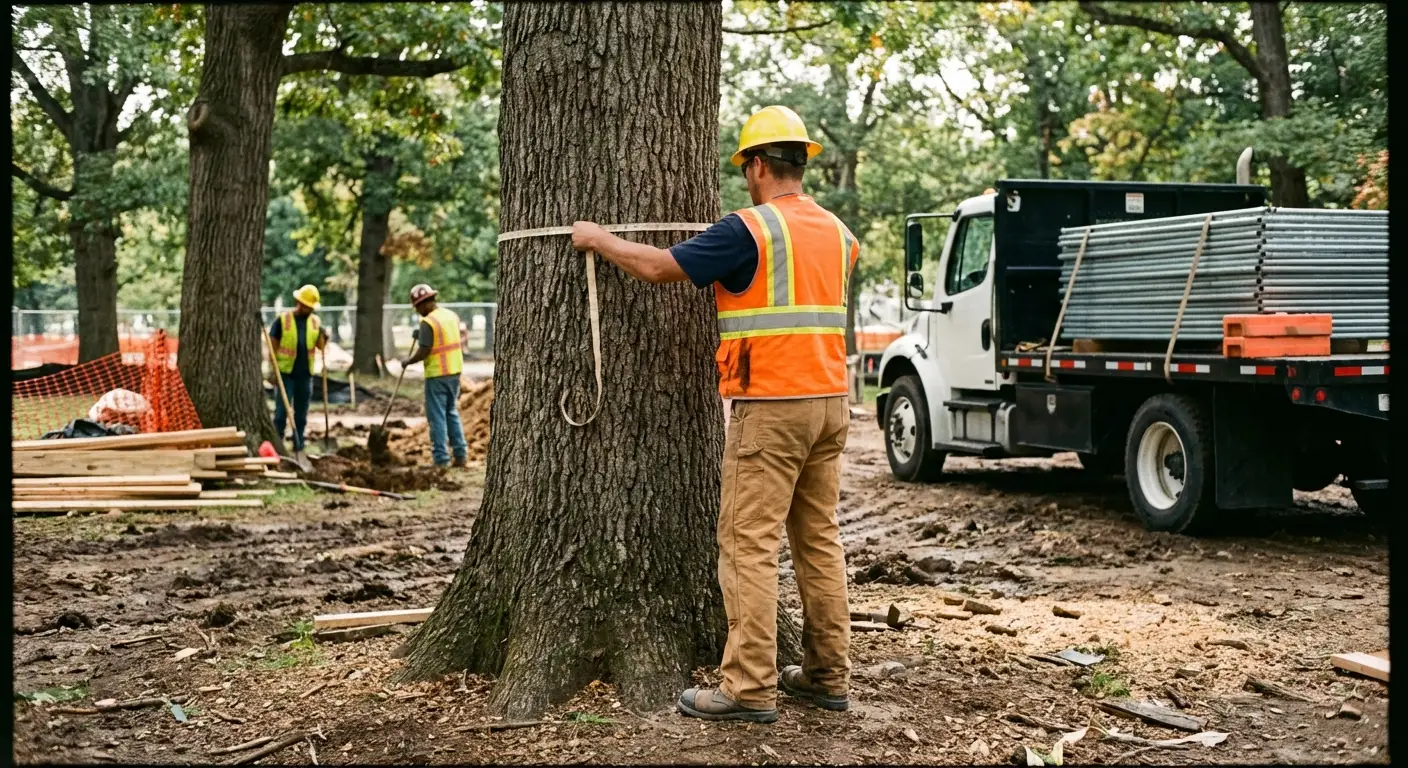
Root Zone Calculation Specifications for TPZ Fencing in Tigard
Accurate root zone depth ensures TPZ fence stability and compliance with Tigard’s soil and safety regulations.
| Fence Type | Temporary Perimeter Zone (TPZ) Fencing |
|---|---|
| Root Zone Depth Requirement | 12–18 inches below grade per Tigard DEQ guidelines |
| Service Areas | North Tigard, West Tigard, Greenburg Road, Downtown Tigard (Main Street) |
| Installation Cost Range | $400-$600 |
| Weekly Rental Rate | $225-$375/week |
| Compliance Standards | Meets OSHA 1926.501 and Oregon DEQ erosion control rules |
| Signage Interval | Every 30 linear feet |
Root Zone Calculation for TPZ Fencing in Tigard
Ensure compliance with local tree protection standards.
Common Mistakes in Root Zone Calculation for TPZ Fencing
Root zone calculation for tree protection zones (TPZ) can get tricky in Tigard’s varied residential and institutional areas. Our crew’s seen many projects stall due to missteps in this crucial step. Avoid these pitfalls to keep your fencing compliant and your trees safe.
Ignoring Tree Species and Size Variations
Applying a one-size-fits-all root zone radius overlooks the unique root spread of Tigard’s native trees, risking damage to roots and non-compliance with local ordinances.
Measure each tree individually, adjusting the root zone radius to reflect species and trunk diameter for accurate TPZ fencing placement.
Underestimating Soil Conditions and Root Depth
Failing to consider Tigard’s soil type and root depth can lead to improper fence placement, causing unnecessary root damage and potential tree health decline.
Assess local soil and root structures before setting TPZ boundaries to ensure fencing protects the critical root zones effectively.
Overlooking Nearby Construction Impact
Not factoring in construction activities near protected trees often results in root compaction or trenching inside the TPZ, violating protection standards and harming trees.
Plan fencing placement with construction zones in mind, creating buffer areas that shield roots from heavy equipment and soil disturbance.
Failing to Adjust for Slope and Drainage
Ignoring terrain slope or drainage patterns around trees causes root zone miscalculations, allowing water runoff or erosion to damage roots despite fencing.
Include topography and water flow in root zone calculations to position TPZ fencing where it truly protects against environmental stressors.
Relying Solely on Visual Estimates Without Survey Data
Estimating root zones by sight alone risks inaccurate fencing boundaries, leading to costly rework or regulatory penalties in Tigard’s neighborhoods.
Use professional surveys or tree protection assessments to set precise TPZ fencing limits that comply with local codes.
Root Zone Calculation for TPZ Fencing: Compliance Guide — Part 2
We believe temporary fencing shouldn’t mean temporary standards. Since 2008, our crew has treated every TPZ layout in Tigard like it’s permanent—because tree roots, soil shifts, and safety risks don’t care if your fence is rented or owned. That’s why we calculate root zones using field-verified setbacks, not just paper plans. It’s how we keep projects moving without callbacks or compliance headaches.
-
Match Base Type to Soil Stability
Tigard’s mix of clay-heavy and loamy soils demands careful pairing of base systems to prevent shifting. We assess on-site conditions before selecting between concrete or steel bases to maintain fence integrity during wet winters.In PracticeIn West Tigard’s clay zones, we use concrete bases for added mass against saturation-induced movement.
-
Respect Protected Root Zones per City Ordinance
Tigard enforces strict tree protection ordinances, especially near older growth in Downtown Tigard. Our layouts always buffer root zones using DEQ-recommended setbacks to avoid fines and ecological harm.In PracticeAround mature oaks near North Tigard, we deploy tree protection zones with calibrated perimeters.
-
Account for Microclimate Wind Exposure
North and West Tigard neighborhoods experience channeling effects from Tualatin Valley breezes. We reinforce panel connections and use wind-rated hardware to meet OSHA wind-load standards without over-engineering.In PracticeOur crews install wind-load-resistant configurations with interlocking hooks in exposed residential zones.
-
Integrate Zero-Trip Design Near Pedestrian Flow
High-foot-traffic areas like Washington Square Mall require seamless ground transitions. We eliminate tripping hazards by using flush-mounted bases and smooth panel edges, aligning with OSHA 30 safety protocols.In PracticeAt commercial sites near Greenburg Road, we specify zero-trip-hazard setups with temporary gates for safe access.
Bridgeport Temp Fencing builds every TPZ layout to meet Tigard’s tree protection rules and OSHA safety expectations—no exceptions, no shortcuts.
Root Zone Calculation for TPZ Fencing: Compliance Guide — Part 3
Guidance on calculating tree protection zones (TPZ) for temporary fencing in Tigard neighborhoods to meet local regulations.
What is the Tree Protection Zone (TPZ) for fencing in Tigard?
The TPZ defines the critical root area around a tree that must be fenced off to prevent damage during construction, commonly calculated as 1 foot radius per inch of trunk diameter in Englewood Park.
How is the TPZ radius measured on older suburban properties in Tigard?
For buildings dating from 1950-1980 in North Tigard, measure trunk diameter at breast height (4.5 feet) and multiply by the prescribed ratio to establish the fencing radius.
Are there special considerations for TPZ fencing near Downtown Tigard's Main Street?
Yes, commercial areas like Downtown Tigard require coordination with city planners to avoid conflicts with underground utilities while maintaining TPZ integrity.
Which local regulations govern root zone protection during fencing installation?
OSHA and Tigard's municipal codes mandate that TPZ fencing be installed before any ground disturbance to comply with safety and environmental standards.
What fencing materials does Bridgeport Temp Fencing recommend for TPZ compliance?
Chain-link panels with secure footings are preferred for durability and ease of installation in Tigard's residential areas like Englewood Park.
Can TPZ fencing be adjusted for irregularly shaped root zones?
Adjustments may be necessary in North Tigard where root zones extend unevenly; fencing should follow the maximum root spread to prevent damage.
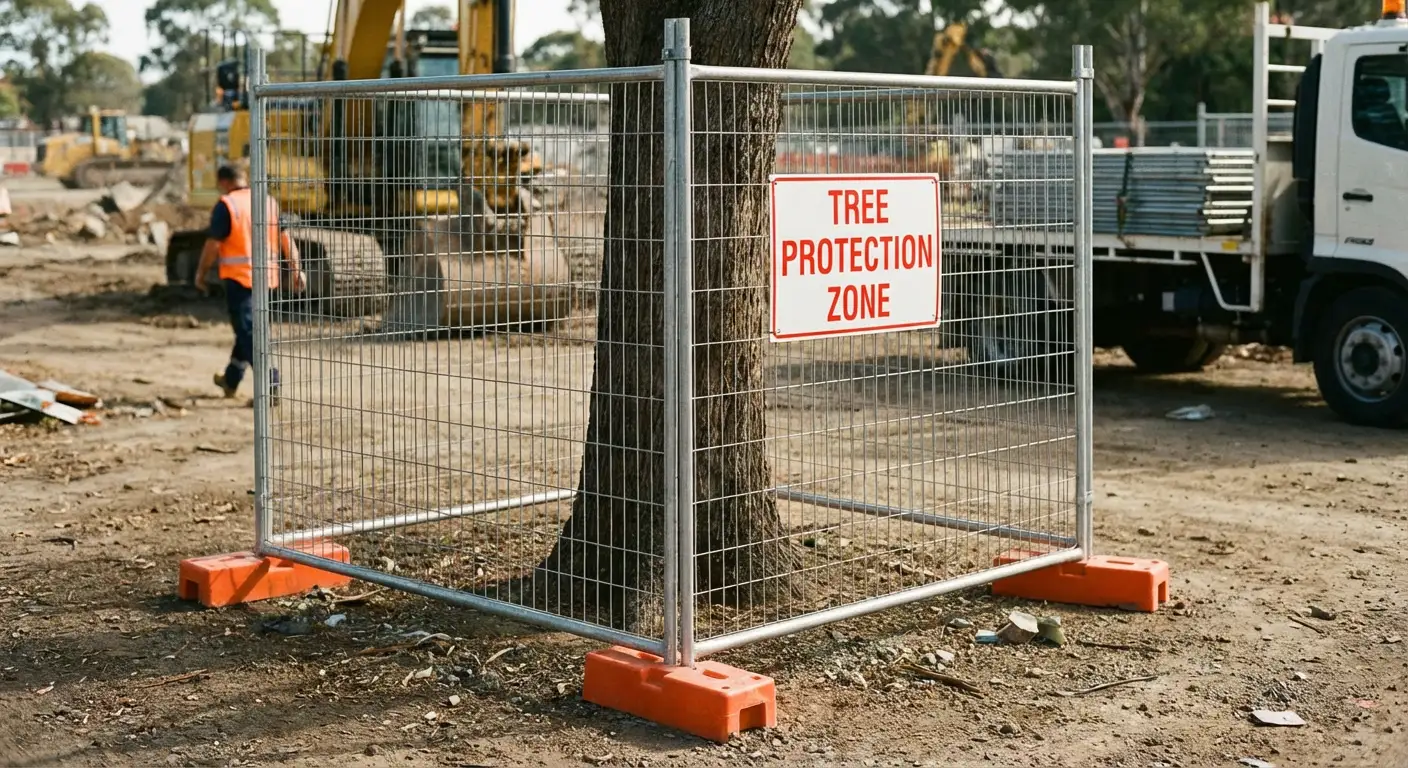
Root Zone Calculation for TPZ Fencing Compliance
Accurate root zone calculations ensure your temporary protective fencing meets Tigard, OR regulatory standards for safety and stability.
Serving Tigard with OSHA-compliant temporary fencing solutions.